“Cyprus golden visa” is still one of the most-searched residency phrases connected to this island, and the honest answer has two halves. The citizenship-by-investment programme (the Cyprus Investment Programme) closed in November 2020 and has not come back. Permanent residence by investment did not close: under Regulation 6(2) of the Aliens and Immigration Regulations, a non-EU investor who puts at least €300,000 into qualifying Cyprus assets can still obtain a permanent residence permit. That permit is what the Cyprus golden visa means in 2026. It gives you the right to live in Cyprus, not a passport.
Here is what the investment route requires, where the confusion comes from, and the four other residency routes that often suit founders better.
What Closed in 2020 and What Did Not
The Cyprus Investment Programme granted citizenship to investors and generated years of marketing content and agent websites. It was shut down in November 2020, and much of that content is still indexed, so searchers often read that the golden visa no longer exists. That is true only for citizenship. The separate permanent residence route under Regulation 6(2) kept running, and its rules were tightened in May 2023 with stricter criminal-record, health-insurance and family checks. An offer of a Cyprus passport in exchange for an investment is out of date; an offer of permanent residence for a qualifying €300,000 investment is not.
The Golden Visa Today: Permanent Residence by Investment
This route is for non-EU nationals who want residence in Cyprus without moving their work there. The main conditions:
- At least €300,000 (plus VAT where it applies) in one of four categories: a new residential property bought from a developer, other real estate such as offices or shops, share capital in a Cyprus company that employs at least five people, or units in a Cyprus investment fund. The money must come from abroad.
- Secured annual income of at least €50,000, plus €15,000 for a spouse and €10,000 for each dependent child. For the residential-property option, this income must come from abroad.
- A clean criminal record from your country of origin and your country of residence, plus health insurance for the family.
- No local job. The permit does not let you work in Cyprus; the main exception is serving as a director of the company you invested in.
- A visit at least once every two years to keep the permit valid.
The Civil Registry and Migration Department usually decides within two to three months of a complete application, and the permit is permanent from the start. It is not citizenship: naturalisation is a separate process that requires years of actual residence. Our Cyprus residency by investment service prepares and files the application for you.
Route 1: The Yellow Slip (EU/EEA Citizens)
If you already hold an EU or EEA passport, this is the simplest path — the MEU1 registration certificate, commonly called the Yellow Slip, requires no investment at all. It confirms your right to reside as an EU citizen exercising free movement, and it is largely a formality once you can show you are working, self-employed, studying, or financially self-sufficient on the island.
Route 2: Category F (Financially Independent, Non-EU)
For non-EU nationals who are not working locally, Category F is the closest thing to a passive-income residency route: it requires demonstrating independent annual income of roughly €30,000, typically from pensions, investments, or overseas business income, without needing to invest in local property or a business. It takes more paperwork than the investment route, but it does not require a large upfront investment.
Route 3: The Digital Nomad Visa
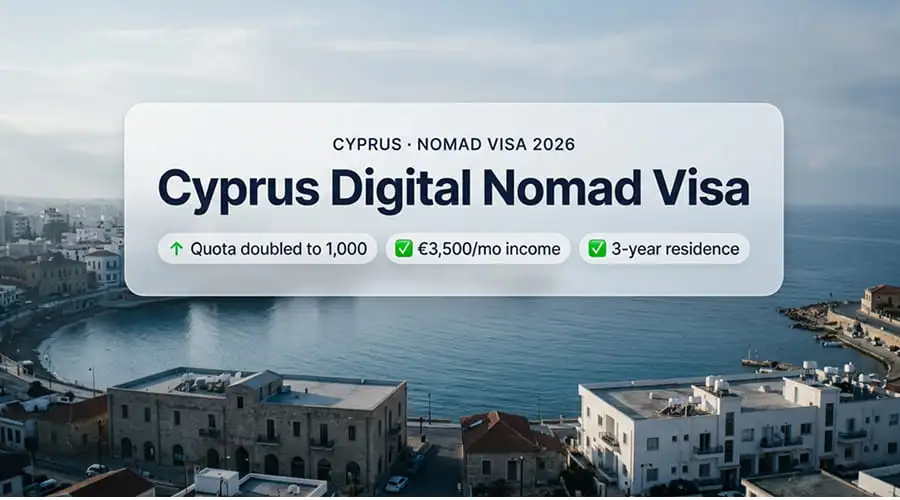
For non-EU remote workers with foreign clients or employers, the Digital Nomad Visa is now the most accessible route on this list — the annual quota doubled to 1,000 permits in October 2025, with talk of scrapping the cap entirely in 2026. It grants up to three years of residence for people earning at least €3,500 net per month from abroad, though it does not permit working for local clients.
Route 4: Work or Company Permits
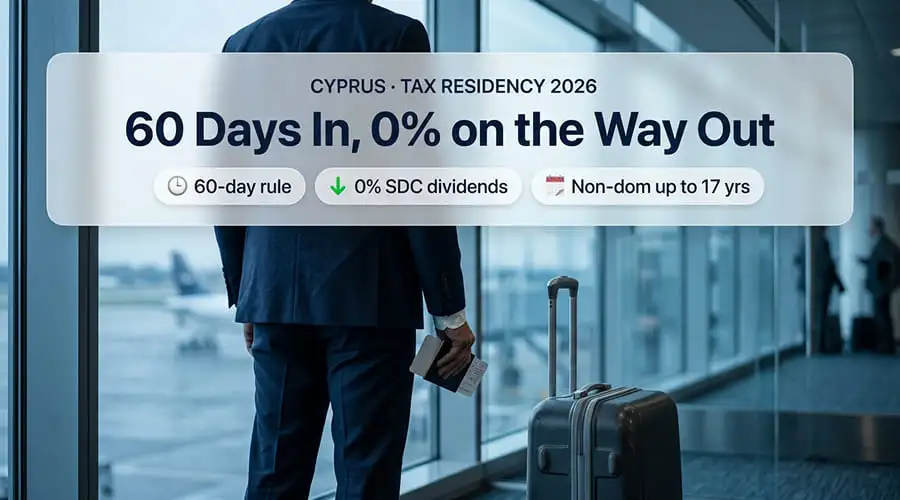
The remaining route is the one most founders in Cyprus actually use: register a Cyprus company, take up a genuine role in it — director, employee, or shareholder-manager — and apply for residency tied to that employment or directorship. Combined with the country’s 60-day tax residency rule and non-dom status, this is usually the route that ends up mattering most for an actual business owner, since it solves residency and tax position together rather than residency alone.
FAQ
Is the Cyprus golden visa still available in 2026?
Yes, as permanent residence. Citizenship by investment (the Cyprus Investment Programme) closed in November 2020, but non-EU investors can still obtain a permanent residence permit under Regulation 6(2) by investing at least €300,000 in qualifying Cyprus assets.
Does the Cyprus golden visa lead to a passport?
Not directly. It is a residence permit, not citizenship. Citizenship by naturalisation is a separate application that requires years of actual residence in Cyprus.
What are the current legal residency routes?
Five: permanent residence by investment (from €300,000), the Yellow Slip for EU/EEA citizens (no investment required), Category F for financially independent non-EU nationals (~€30,000/year income), the Digital Nomad Visa for remote workers, and work or company permits tied to genuine employment or directorship.
Can I still get residency through property investment?
Yes. A new residential property bought from a developer for at least €300,000 plus VAT is one of the four qualifying investments for permanent residence, provided you also meet the income (from €50,000 a year), clean-record and health-insurance conditions.
Which route is best for a business owner?
Usually a work or company permit tied to a real role in a Cyprus company, paired with tax residency under the 60-day rule and non-dom status. It addresses residency and tax position at once. Investors who do not plan to work in Cyprus often choose permanent residence by investment instead.
Why do so many websites say the golden visa is gone?
Most of them mean the citizenship programme, which closed in November 2020. The permanent residence route kept running. Treat any offer of a Cyprus passport in exchange for an investment as outdated.
Conclusion
The Cyprus golden visa in 2026 is a permanent residence permit for a €300,000 investment, not a passport. The citizenship programme closed in 2020 and has stayed closed. If you would rather not tie up that capital, four other routes remain: free EU movement via the Yellow Slip, passive-income residency via Category F, remote-work residency via the Digital Nomad Visa, or an employment/company-based permit that, for a founder, usually pairs well with tax residency planning. Pick the route that matches your citizenship, income and plans.
Not sure which residency route fits your situation, or whether it should be paired with tax residency and non-dom status? Send us your citizenship, income source, and whether you’re planning to run a company here, on Telegram or WhatsApp, and we will map out the route that actually applies to you.
Setting up a company abroad?
Get a free first consultation on jurisdiction, structure and banking.

This article is for general informational purposes only and is not legal, tax, or financial advice. Consult a qualified professional before acting. Editorial Policy.