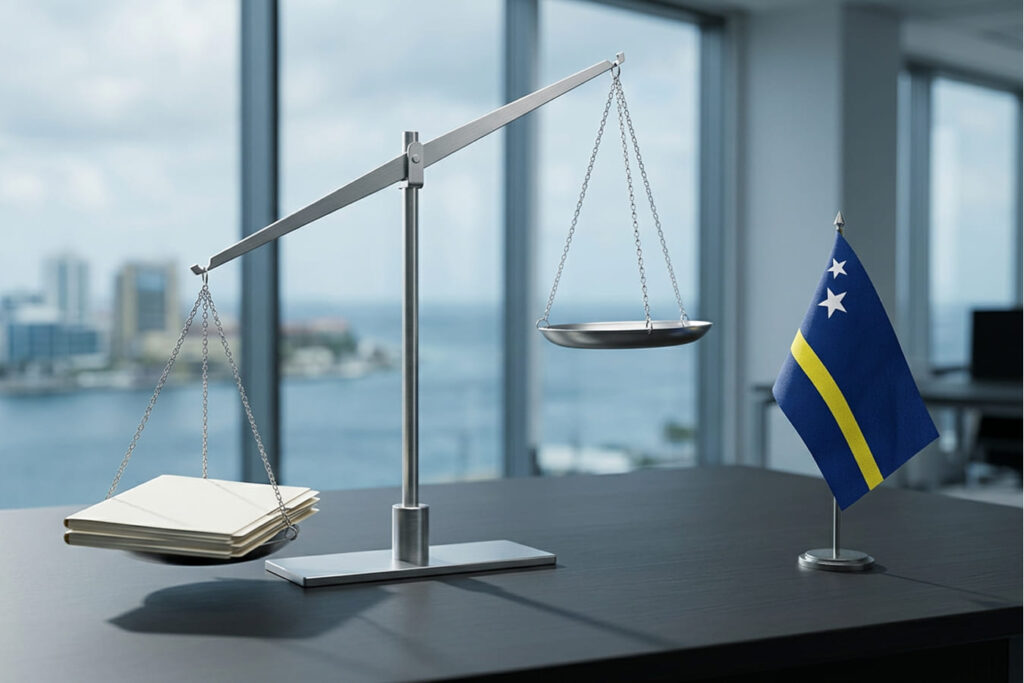
The Curaçao iGaming license is not what it was three years ago. The 2023–2025 regulatory reform replaced the old sub-license model with a direct licensing system under the Curaçao Gaming Authority (CGA), the successor to the Curaçao Gaming Control Board (GCB). For operators evaluating Curaçao in 2026, the cost, timeline, and compliance requirements are materially different from what they would have found in 2022. This article gives you the current reality.
What Changed: The 2023–2025 Reform
Before the reform, Curaçao’s gaming market operated through four master licensees who each issued hundreds of sub-licenses to operators. The system was fast and inexpensive but widely criticised for low oversight, inadequate player protection, and poor AML standards.
The Curaçao government enacted the Landsverordening op de kansspelen (LOK), in force since 24 December 2024; direct licensing by the Gaming Control Board (GCB) from 2023 was the transitional step. Key changes:
- Sub-licenses were phased out; all operators must now hold a direct Concessie (license) from the CGA
- The CGA introduced new technical, AML, and responsible gambling standards aligned with European norms
- Local representation requirements were introduced — operators must have a local compliance contact in Curaçao
- The licensing fee was restructured: a B2C licence costs €47,450 per year (€24,490 National Treasury fee plus €22,960 CGA supervisory fee), and a B2B licence €24,490 per year
- A one-off application fee of €4,592 applies to both B2C and B2B applicants
Operators who held sub-licenses under the old system were required to apply for direct CGA licensing before the transition deadline (end of 2025). New applicants go directly through the CGA process.
Who Regulates Curaçao Gaming
The Curaçao Gaming Authority (CGA) is the competent authority for all online gambling licenses issued under the LOK framework. The CGA is the continuation of the Gaming Control Board (GCB): it took that name when the LOK entered into force on 24 December 2024 and replaced the previous master-licence structure (Curaçao eGaming and the other master licence holders).
The CGA maintains a public registry of licensed operators. Verification is possible through the official CGA portal. License numbers under the new system follow a different format from the old sub-license numbers — if you are dealing with an operator displaying an old-format sub-license number and claiming it is still valid, verify the current status directly with the CGA.
Operators must be structured as a Curaçao BV (Besloten Vennootschap) or NV (Naamloze Vennootschap) — a Curaçao-registered company — to hold a CGA license.
The Application Process in 2026
Step 1 — Company formation: Incorporate a Curaçao BV or NV. This requires a local registered agent, local registered office, and a company structure that meets CGA criteria. Formation typically takes 2–4 weeks.
Step 2 — Local compliance appointment: Designate a local compliance officer or appoint a CGA-approved compliance service provider. This is mandatory and must be in place before application submission.
Step 3 — Document preparation: The CGA application requires:
- Complete KYC for all beneficial owners (passport, proof of address, source of funds, criminal background check)
- Corporate structure chart with full beneficial ownership disclosure
- Business plan including target markets, responsible gambling framework, and AML programme
- Technical platform documentation and RNG certification by a CGA-approved lab
- AML/KYC policy (full, not template)
- IT security assessment
Step 4 — Application submission and fee payment: The application is submitted to the CGA along with the applicable application fee. The CGA reviews for completeness before entering substantive review.
Step 5 — CGA review: The substantive review covers KYC quality, technical compliance, AML programme adequacy, and business plan credibility. Timeline: 2–6 months depending on application volume and completeness.
Step 6 — License issuance: Upon approval, the Concessie is issued and the operator appears in the CGA public registry. The license is valid for a defined term (typically annually renewable).
Full Cost Breakdown
| Cost Element | Amount |
|---|---|
| Annual CGA license fee (B2C) | €47,450 |
| CGA application fee (one-off) | €4,592 |
| Company formation (BV/NV) | €3,000–6,000 |
| Local registered agent | €2,000–4,000/year |
| Local compliance officer/service | €5,000–15,000/year |
| RNG certification (CGA-approved lab) | €4,000–10,000 |
| AML/KYC setup and software | €3,000–8,000 |
| Banking/EMI setup | €5,000–15,000 |
| Legal and application preparation | €5,000–15,000 |
| Year 1 total estimate | €79,000–125,000 |
These figures represent a realistic range — not a best-case scenario. The compliance overhead under the new CGA framework is the primary cost driver that distinguishes Curaçao 2026 from Curaçao 2022.
Banking Under a Curaçao CGA License
The post-reform CGA license has improved Curaçao’s standing with some payment providers relative to the old sub-license system. However, the improvement is incremental, not transformational.
Tier-1 European banks (ABN AMRO, ING, Deutsche Bank, Barclays) still decline gaming clients regardless of offshore license type. Where the CGA license provides an advantage is with specialist iGaming payment providers and mid-tier acquiring banks in Eastern Europe and Southeast Asia, some of which specifically require a Curaçao license as a minimum threshold.
Crypto payment integration is straightforward under Curaçao: the CGA framework does not prohibit crypto deposits, and several established crypto payment gateways work with CGA-licensed operators.
Budget €5,000–15,000 for banking setup in the first year. Expect 6–12 weeks for banking to be operational from application submission.
Compliance Requirements: Ongoing Obligations
Curaçao post-reform compliance is heavier than Anjouan:
- Quarterly compliance reports to the CGA on player activity, AML incidents, and technical performance
- Annual license renewal with updated KYC for all beneficial owners and compliance certification
- CGA-approved technical audits at defined intervals (initial and periodic)
- Responsible gambling reporting — self-exclusion data, problem gambling indicators, player protection measures
- AML suspicious activity reporting — formal SAR filing obligations to Curaçao FIU (Financial Intelligence Unit)
An in-house or outsourced compliance officer is not optional — it is a license condition.
Curaçao vs. Other Jurisdictions in 2026
| Factor | Curaçao (CGA) | Anjouan (AGB) | Malta (MGA) |
|---|---|---|---|
| Annual regulatory fee | €47,450 | €17,828 | €25,000+ |
| Timeline | 4–6 months | 4–8 weeks | 4–12 months |
| Year 1 total cost | €79K–125K | €25K–45K | €100K–200K+ |
| Banking recognition | Moderate | Limited | High |
| Compliance burden | High | Moderate | Very high |
Frequently Asked Questions
Q: Is the old Curaçao sub-license still valid in 2026? A: No. The transition period for sub-licenses ended in 2025. Operators who held sub-licenses and did not transition to direct CGA licensing are no longer operating legally under Curaçao regulation. If you are evaluating an operator holding an old-format Curaçao sub-license, verify current status directly with the CGA.
Q: Can I apply for a Curaçao license without a physical presence in Curaçao? A: You can incorporate a Curaçao BV through a local registered agent without personally being present. However, the CGA requires a local compliance contact — a physical person or entity in Curaçao responsible for regulatory communication. This can be a licensed compliance service provider, not necessarily an employee.
Q: Does the CGA license allow cryptocurrency gambling? A: The CGA framework does not prohibit cryptocurrency gambling. Operators may accept crypto deposits and withdrawals subject to their AML programme covering crypto-specific risks (blockchain analytics, wallet screening). This must be documented in the AML policy.
Q: How long does CGA license renewal take? A: Renewal applications should be submitted at least 60 days before the license expiry date. Processing time for renewals is typically 4–6 weeks if no material changes to the operation have occurred.
Q: What happens if the CGA finds compliance violations? A: The CGA’s enforcement tools include warning notices, fines (amounts published in the LOK regulations), license suspension, and license revocation. Revocation removes the operator from the public registry and terminates all player contracts. The severity of the response is calibrated to the nature and duration of the violation.
Conclusion
The Curaçao iGaming license in 2026 is a genuinely regulated product — slower and more expensive than the old sub-license system, but carrying more regulatory weight as a result. For operators who need broader payment provider acceptance and are prepared for the compliance overhead, the CGA license is a reasonable choice. For early-stage operators prioritising speed and cost, Anjouan is the faster and leaner alternative. The decision should be driven by your specific market and payment infrastructure needs, not by brand name alone.
Ready to obtain your Anjouan gaming license? Legarithm manages the full process — from documentation to banking. Get started
This article is for informational purposes only and does not constitute legal advice. Regulations change frequently — consult a qualified professional before making any decisions.
If you are weighing Curaçao against the offshore alternatives, our detailed look at Anjouan: a viable alternative to Curaçao sets out how the two regimes compare on cost, coverage and time to licence.
Planning a gambling license?
Compare Anjouan, Curaçao, Tobique and Kahnawake with our licensing team. The first call is free.

This article is for general informational purposes only and is not legal, tax, or financial advice. Consult a qualified professional before acting. Editorial Policy.