The Anjouan gaming license has become one of the most widely used entry points into the regulated iGaming market. Issued by the Anjouan (Comoros) regulator under the Computer Gaming Licensing Act 007 of 2005, it lets a single operator run casino, sportsbook, poker and crypto-gambling products under one permit — at a fraction of the cost and time of Malta or the Isle of Man. With the Curaçao regime tightening and growing more expensive through its LOK reform, 2026 has pushed a wave of operators toward Anjouan as the practical, cost-efficient alternative. This guide explains, in plain terms, what the licence is, what it costs, how to get it, who it restricts, how to keep it in good standing, and how it compares to Curaçao and Kahnawake.
What is the Anjouan gaming license?
Anjouan is an autonomous island of the Union of the Comoros. Its gaming framework, established under Act 007 of 2005 (the Computer Gaming Licensing Act), is administered today by the Anjouan gaming regulator, which issues licences to online operators worldwide. The defining feature is its single-licence model: one B2C licence authorises casino, live casino, sportsbook, poker and crypto betting together — there is no need to buy separate vertical sub-licences as you would under several other regimes.
That structure is the main reason startups and migrating operators choose Anjouan. Instead of stacking permits and fees per product, an operator obtains one licence, tied to one Anjouan company, that covers the full product range. The regime has matured considerably over the past few years: more payment providers, game studios and platform vendors now recognise the licence for onboarding, which is what makes it genuinely usable rather than merely cheap.
Why operators choose Anjouan in 2026
- One licence, all verticals. Casino, sportsbook, poker and crypto under a single permit — no per-product sub-licences.
- 0% gaming (GGR) tax. No tax on gross gaming revenue at the licence level, which materially improves unit economics for a new brand.
- Low cost of entry. Total first-year cost from around €17,828 — far below Malta, the Isle of Man or Kahnawake.
- Fast issuance. Typically 4–8 weeks from a complete application — one of the quickest routes to a live, licensed operation.
- Crypto-friendly. Crypto gambling and crypto payments (USDT/USDC) are accommodated within an AML framework.
- Recognised by partners. Mainstream PSPs, aggregators and game providers accept the licence for onboarding.
- A clear migration path from Curaçao. As Curaçao’s reformed LOK regime raises costs and lengthens timelines, Anjouan offers comparable all-in-one coverage at a lower price point.
How much does an Anjouan gaming license cost?
The all-in first-year cost starts from approximately €17,828. That figure covers the licence application, the required Anjouan company, and the core compliance setup needed to file. Renewal is annual. Because the licence covers all gaming verticals at once, there is no stacking of per-product fees as you would see under multi-licence regimes — a single operator running casino and sportsbook pays once, not twice.
What sits inside the total typically includes the government/regulator licence fee, incorporation and registered-agent costs for the Anjouan company, and the AML/KYC and policy work required for submission. Ongoing costs are the annual renewal plus whatever you spend maintaining compliance (a compliance officer or outsourced function, periodic policy updates). For a line-by-line breakdown of government fees, company costs and ongoing compliance — and how to budget realistically for year two onward — see our detailed Anjouan gaming license cost breakdown.
License types and what they cover
The Anjouan B2C licence is the workhorse permit for operators running their own brands across casino and betting. It is the licence most operators need to launch a full casino-and-sportsbook offering under one roof. For software vendors, aggregators and platform suppliers, a B2B / recognition route exists that lets you supply licensed operators and evidence your standing to partners — see our note on the Anjouan B2B license & recognition certificate. Choosing the right category up front avoids re-filing later: most operator businesses need only the single B2C licence, while suppliers should look at the B2B path.
Requirements for an Anjouan gaming license
The regulator focuses on legitimate ownership, clean source of funds, and a workable compliance setup rather than the heavy capital requirements of EU regimes. In practice you will need:
- A company. An Anjouan company (or a recognised offshore vehicle) to hold the licence. Incorporation is part of the standard turnkey package.
- KYC / UBO documentation. Fit-and-proper evidence for beneficial owners and directors — passports, proof of address, CVs and source-of-funds documentation.
- AML/CFT framework. A written AML/KYC policy and a nominated compliance officer responsible for monitoring and reporting.
- Technical documentation. Details of your platform, game providers and RNG, plus the domains you intend to operate.
- Responsible-gaming controls. Self-exclusion, deposit limits, age verification and related player-protection measures.
None of this requires the large paid-up capital or local-presence obligations of Malta or the Isle of Man, which is a large part of why the route is fast and affordable. The full checklist, with document templates and common pitfalls, is in our Anjouan gaming license requirements guide.
The application process and timeline
The typical path has five stages:
- Incorporate & collect documents. Set up the Anjouan company and gather KYC/UBO and source-of-funds materials.
- Assemble the compliance pack. AML policy, responsible-gaming measures and technical documentation for your platform and providers.
- Submit the application. File the complete pack with the regulator.
- Due-diligence review. The regulator vets ownership, documents and the compliance setup, and may raise follow-up questions.
- Issuance. The licence is granted and you can go live and onboard payment and game providers.
End to end this usually takes 4–8 weeks when documents are complete — delays almost always come from incomplete KYC or an unclear ownership chain, not from the regulator. A turnkey provider handles incorporation, the filing and the compliance pack on your behalf, which is what keeps the timeline at the short end. You can get an Anjouan gaming license with Legarithm as a single managed process, from company to live licence.
Restricted countries
An Anjouan licence does not authorise operation in every market. Operators must geoblock jurisdictions that require their own local licence or are otherwise excluded — for example the United States, the United Kingdom and a number of regulated or sanctioned markets — and apply FATF-aligned controls. Getting geoblocking right is not optional: serving a restricted market can jeopardise the licence and your payment relationships. The current list and the geoblocking logic are covered in Anjouan gaming license restricted countries, and the markets you can serve are mapped in where you can operate with an Anjouan license.
Payments and banking
Anjouan-licensed operators work with both card processors and crypto rails. A valid licence is what most payment providers and platforms require for onboarding, so the licence and your payment setup go hand in hand. Crypto (USDT/USDC) is common and well supported, paired with AML/KYC checks; fiat card processing is available through PSPs that accept the jurisdiction. The practical issue is matching processors to your target markets and product mix. For setup detail see our guides on payments for Anjouan operators and crypto payments in Anjouan.
Company structure and technical infrastructure
Behind the licence sit two practical workstreams: the corporate structure and the technical setup. On the corporate side, the licence is held by an Anjouan company with a clean, documented ownership chain (IBC and UBOs); getting this right up front is what keeps due diligence smooth. We cover it in corporate structure for Anjouan: IBC and UBOs. On the technical side, the regulator expects a sound hosting and data setup; our note on infrastructure rules for Anjouan explains the replication and hosting expectations operators should plan for. Settling both before you file removes the two most common sources of back-and-forth during review.
Launching and running your brand
A licence is the start, not the finish. Going live cleanly means having your domains, policies, terms and responsible-gaming pages in place — our Anjouan launch checklist walks through domains and policies step by step, and responsible gaming in Anjouan covers the marketing and player-protection rules you must follow. Operators who do not want to build the full stack themselves often choose a white-label solution in Anjouan, which bundles platform and licence coverage without a separate sub-licence. And once live, you can confirm a licence’s status at any time — see how to verify an Anjouan gaming license.
Anjouan vs Curaçao vs Kahnawake
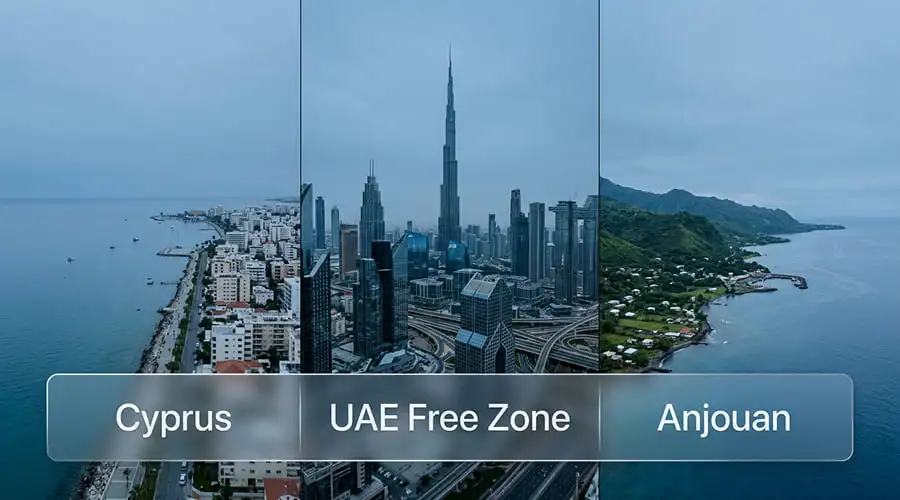
Anjouan is most often compared to Curaçao (its closest peer) and Kahnawake. The short version:
| Factor | Anjouan | Curaçao | Kahnawake |
|---|---|---|---|
| Indicative annual cost | from ~€17,828 | ~€47,450 (LOK) | premium (CAD) |
| Verticals per licence | all-in-one | all-in-one (new LOK) | per-permit |
| Gaming (GGR) tax | 0% | low | low |
| Typical timeline | 4–8 weeks | longer under new regime | longer |
| Best for | cost-efficient launch / Curaçao migration | established brands on the new LOK regime | operators wanting a long-standing North-American name |
Curaçao remains a respected name, but its reformed LOK regime has raised costs and lengthened timelines, which is precisely what is pushing price-sensitive operators to look elsewhere. Kahnawake carries a long-standing reputation but is structured around per-permit licensing and a higher price point. Anjouan wins on speed and cost while still offering all-in-one coverage — which is why, for operators leaving the reformed Curaçao regime, it is the pragmatic alternative. We cover the trade-offs in depth in Anjouan vs Curaçao vs Kahnawake and in why operators switch from Curaçao to Anjouan. If you are weighing the premium European regimes too, see Anjouan vs Malta vs Isle of Man; operators already on Curaçao can follow our 30-day Curaçao-to-Anjouan migration plan. And if your product is trading rather than gaming, note the distinction in Anjouan gaming vs forex licenses.
Is the Anjouan gaming license legitimate?
Yes. The Anjouan licence is a real, statutory permit issued under Act 007 of 2005 by the island’s gaming authority, and it is accepted by mainstream payment processors, game studios and platform providers for onboarding. Some commentary online conflates “cheap” with “illegitimate” — but a low cost reflects a lean, low-tax jurisdiction, not a lack of legal standing. The same logic would label every low-tax offshore centre a scam, which is plainly wrong.
What actually matters in practice is execution: that the licence is issued correctly, that the company and its beneficial owners pass due diligence, and that the operator runs proper AML/KYC, responsible gaming and geoblocking. A licence that is filed sloppily, or used to serve restricted markets, will create friction with banks and processors regardless of jurisdiction. Working with a provider that files the application correctly and keeps the licence in good standing is the difference between a licence that “just works” with partners and one that causes problems.
Common mistakes and how to keep your license in good standing
Most problems operators run into are avoidable:
- Incomplete or inconsistent KYC. The single biggest cause of delay. Make sure UBO documents, source of funds and the ownership chain line up before filing.
- Weak geoblocking. Failing to block restricted markets is the fastest way to endanger both the licence and payment relationships.
- Treating compliance as one-off. AML monitoring, responsible-gaming controls and policy updates are ongoing obligations, not a launch checkbox.
- Missing the renewal. The licence renews annually; lapses interrupt processing and partner trust.
- Picking the wrong licence category. Operators need B2C; suppliers need B2B. Filing the wrong one means re-doing the process.
Keeping the licence in good standing — timely renewals, clean AML records, accurate geoblocking — is what preserves your payment and platform relationships over time.
Who the Anjouan license is best for — and who should look elsewhere
Anjouan is a strong fit if you are: a startup or mid-size operator launching casino and/or sportsbook on a lean budget; a brand migrating off the reformed Curaçao regime; a crypto-first operator that needs a licence accepted by payment and platform partners; or a B2B supplier needing recognition to sell into licensed markets. In all of these, the all-in-one licence, 0% GGR tax, fast 4–8-week timeline and ~€17,828 entry cost make it the most efficient route to “legal and live”.
Anjouan is the wrong choice if you: specifically need to serve a regulated market that requires its own local licence (e.g. UK, most of the US, Italy, Germany) — no offshore licence substitutes for those; are a large, listed operator whose partners or investors mandate an EU/UK ticket (Malta, Isle of Man); or expect a “set-and-forget” permit — like any licence, Anjouan requires ongoing AML, responsible-gaming and geoblocking compliance to stay in good standing. If your target markets are EU/UK-regulated, see Anjouan vs Malta vs Isle of Man; for everyone targeting global/emerging markets cost-efficiently, Anjouan is usually the right call.
How to get started
The fastest route is a turnkey setup: company, licence application, compliance pack and payment onboarding handled as one project, so nothing falls between the cracks and the timeline stays at the short end. Legarithm runs the full process end to end and keeps the licence compliant afterward — apply for an Anjouan gaming license or book a free consultation to scope your launch.
Frequently asked questions
How much does it cost to get a gaming license in Anjouan?
From approximately €17,828 for the first year, covering the licence, the required company and core compliance. Renewal is annual, and there are no separate per-vertical fees because one licence covers all products. See the full cost breakdown.
How do I get an Anjouan gaming license?
Incorporate the company, prepare KYC/UBO and compliance documents, submit the application to the regulator, pass due diligence, and receive the licence — typically within 4–8 weeks with a turnkey provider handling the process end to end.
How long does it take to get licensed in Anjouan?
Usually 4–8 weeks from a complete application. The variable is document readiness: clean KYC and a clear ownership chain keep it at the short end.
Does the Anjouan license cover casino, sportsbook and crypto?
Yes. A single B2C licence covers casino, live casino, sportsbook, poker and crypto betting — there are no separate sub-licences per vertical.
What is the Anjouan Computer Gaming Licensing Act 007 of 2005?
It is the statute that established Anjouan’s online gaming licensing regime and empowers the regulator to issue and supervise licences for operators worldwide.
What countries are restricted by the Anjouan license?
Operators must geoblock markets that require a local licence or are otherwise excluded (e.g. the US and UK) and apply FATF-aligned controls. See the restricted countries guide for the current list.
Is the Anjouan gaming license legitimate?
Yes — it is a statutory licence under Act 007 of 2005, accepted by mainstream payment and game providers. Legitimacy depends on correct filing, passing due diligence and ongoing compliance, not on the (comparatively low) price.
Is Anjouan better than Curaçao for a gaming license?
It depends on your priorities. Anjouan wins decisively on cost (from ~€17,828 vs ~€47,450 under Curaçao’s reformed LOK regime), issuance speed (4–8 weeks vs the longer timelines now typical under the new Curaçao framework) and 0% gaming tax, while still covering casino, sportsbook, poker and crypto under a single all-in-one licence. Curaçao keeps a more established brand reputation. For price-sensitive operators and startups, Anjouan is usually the more practical choice in 2026; established brands already embedded in the LOK regime may stay on Curaçao.
Can I migrate my Curaçao license to Anjouan?
You cannot transfer a Curaçao licence as such, but you can switch jurisdictions: incorporate an Anjouan company, obtain the Anjouan licence and re-point your operation to it, then wind down the Curaçao setup. With KYC/UBO documents already prepared from your Curaçao filing, the changeover is fast — we map it out step by step in our 30-day Curaçao-to-Anjouan migration plan and explain the drivers in why operators switch from Curaçao to Anjouan.
Planning a gambling license?
Compare Anjouan, Curaçao, Tobique and Kahnawake with our licensing team. The first call is free.

This article is for general informational purposes only and is not legal, tax, or financial advice. Consult a qualified professional before acting. Editorial Policy.