Since MiCA (the EU’s Markets in Crypto-Assets Regulation) became fully applicable, a single crypto-asset service provider (CASP) authorisation can be passported across the entire EU. The question for 2026 is no longer “is crypto regulated?” but “which member state should I get authorised in?” This guide compares the practical front-runners.
What MiCA changed
MiCA replaced the old patchwork of national crypto registrations with one harmonised CASP licence. Authorise in one member state, and you can serve clients across all of them by passporting — no separate licence per country. Transitional grandfathering for previously registered providers has been winding down through 2026, so existing operators must convert to full CASP authorisation.
Which country to choose
The licence is the same; the regulator, timeline, cost, and substance expectations differ. Practical front-runners:
- Lithuania — a long-standing crypto hub with an experienced regulator and a deep service ecosystem.
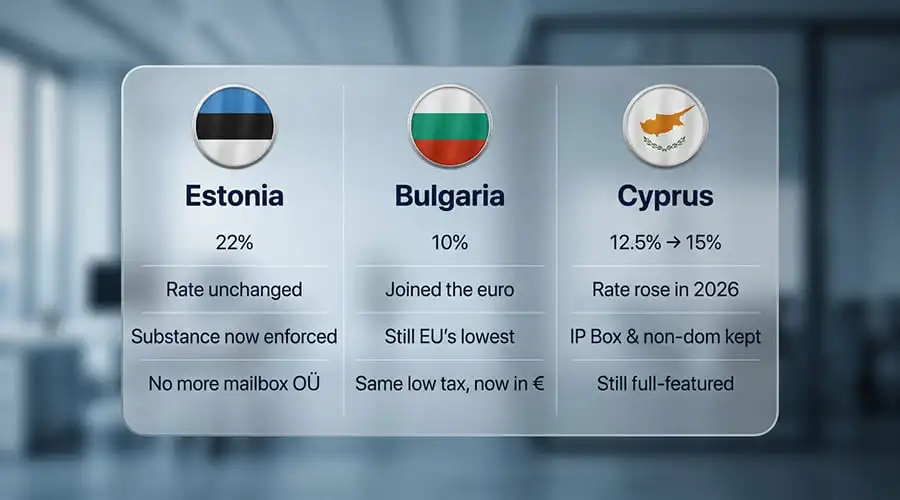
- Estonia — early mover on crypto licensing, strong digital-government infrastructure.
- Bulgaria — lower-cost EU entry with growing CASP activity.
- Cyprus — CySEC-supervised, attractive where you also want an EU corporate and tax base.
What the regulator looks for
Wherever you apply, MiCA sets common bars: fit-and-proper management, minimum capital appropriate to your services, robust AML/CFT and custody arrangements, and genuine substance in the member state. A “letterbox” CASP will not pass.
How to decide
Match the jurisdiction to your business: the services you offer (exchange, custody, transfer), your budget, where you can build real substance, and which regulator’s timeline you can live with. Because the licence passports, you are choosing a home base, not a market.
Frequently asked questions
What is a CASP licence under MiCA?
A crypto-asset service provider authorisation under the EU’s MiCA regulation. Once authorised in one member state, you can passport services across the whole EU.
Which EU country is best for a crypto licence?
There is no single “best” — Lithuania, Estonia, Bulgaria and Cyprus are common choices. The right one depends on your services, budget, substance, and the regulator’s timeline.
Do I need a separate licence per EU country?
No. MiCA’s passporting lets one CASP authorisation cover all member states.
Does MiCA require real substance?
Yes. Fit-and-proper management, adequate capital, AML/CFT controls and genuine presence in the licensing state are required; letterbox setups do not qualify.
The bottom line
MiCA turned 27 national regimes into one passportable licence — so the decision is where to base, not where to sell. Pick the regulator and cost profile that fit your model. See our Cyprus CASP guide or talk to our team to compare jurisdictions.
General information, not legal or financial advice. Crypto regulation evolves quickly; confirm current requirements with the relevant regulator or a qualified adviser. See our Editorial Policy.
Launching a crypto business?
Get a free first consultation on the right license (MiCA/CASP, VARA or an offshore VASP), structure and banking.

This article is for general informational purposes only and is not legal, tax, or financial advice. Consult a qualified professional before acting. Editorial Policy.