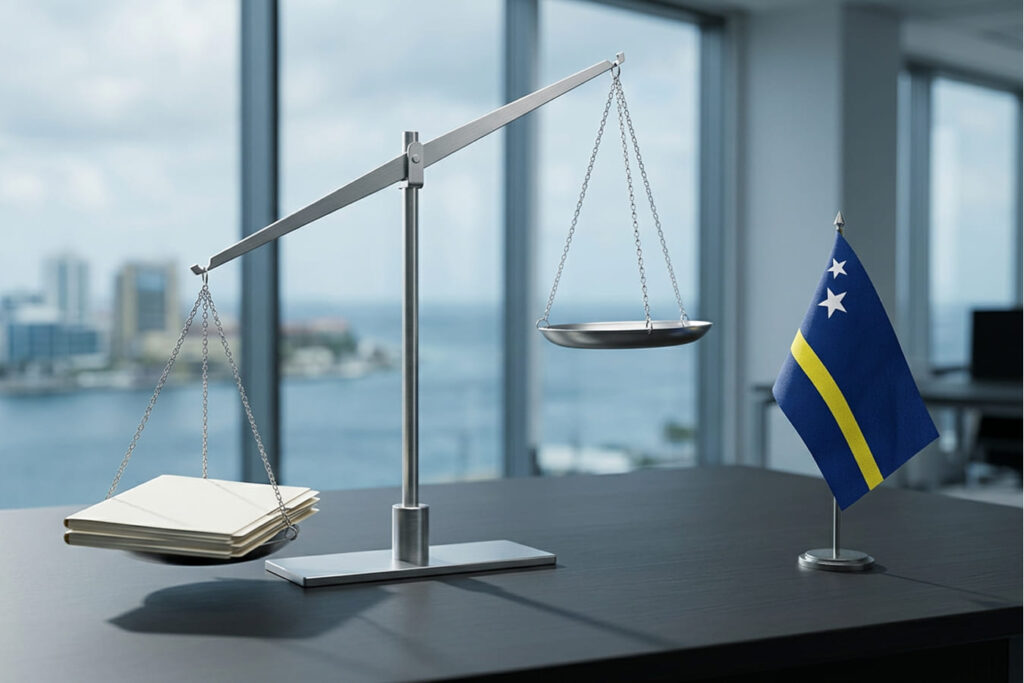
On September 10, 2025, the Curaçao Gaming Authority (CGA) added new principles regarding section 5.12. These updates apply to both B2B and B2C licenses and significantly change the requirements for physical office presence and employee employment in Curaçao, which is important for businesses operating in the gambling industry. In this article, we will look at the key points of the new legislation.
Office in Curaçao and permanent employment
The main point that has been added to the guidelines is the requirement for licensees to have a physical office in Curaçao. The office must be equipped with the appropriate facilities to carry out economic activities that are permitted under the gambling license. This means that companies must not only rent premises but also ensure that they are functional in accordance with the specifics of the gambling business.
According to the new requirements, during the first four years after the LOK comes into force, the licensee must ensure that there is at least one employee (other than the local managing director) who will work full-time in the office in Curaçao. The employee must be registered in the Curacao population registry and may be hired on a direct employment basis or under another contractual agreement.
Starting from the fifth year after the LOK comes into force, the licensee must ensure compliance with the same requirements for at least three key persons.
Key person — This is a person who directly or indirectly controls or has significant influence over the management and operational policies of the licensee, including those involved in product development, risk management, operational control, or other critical aspects that determine the effectiveness of the company’s operations in Curaçao. These may be employees responsible for game development, programming, marketing, or analytics.
Incompatibility of positions and AML/CFT requirements
Of particular importance is a new provision that establishes the incompatibility of certain roles within a company. For example, the CEO or equivalent positions cannot combine their functions with roles responsible for regulatory compliance, particularly in matters of anti-money laundering (AML) and counter-terrorist financing (CFT). Under the new requirements, the AML/CFT function must be independent of any operational positions in the company, as well as the audit function.
It is prohibited for a beneficial owner (UBO) or director to hold positions related to AML/CFT functions. This important provision is aimed at ensuring high standards of combating financial crime in the gambling sector.
Exceptions for small operators
For smaller operators that meet certain conditions, there is the possibility of exemption from the requirement to have a physical office in Curaçao. The requirements for such operators include the following provisions:
- The company applying for a license must have been registered for at least one year prior to the application;
- None of its ultimate beneficial owners (UBOs) may currently be, or have been within the two years prior to the application, the ultimate beneficial owner of any other local or foreign enterprise involved in gambling
- The gross revenue of such a company must be less than €10 million for the calendar year preceding the license application.
Small operators must submit audit reports every six months to confirm compliance. This allows them to maintain their preferential status. If the company no longer meets the requirements for exemption, the licensee must comply with the standard requirements from the moment the exemption ceases to apply, rather than from the moment the license is issued.
Transition period:
The local presence requirement came into force when the LOK law was passed on December 24, 2024, and became mandatory on June 24, 2025. However, a transition period until December 31, 2025, is provided for licensees. This means that, starting January 1, 2026, all licensees are required to fully comply with the physical presence requirements, except where they qualify for tax exemption under section 5.12(4) of the LOC.
Planning a gambling license?
Compare Anjouan, Curaçao, Tobique and Kahnawake with our licensing team. The first call is free.

This article is for general informational purposes only and is not legal, tax, or financial advice. Consult a qualified professional before acting. Editorial Policy.