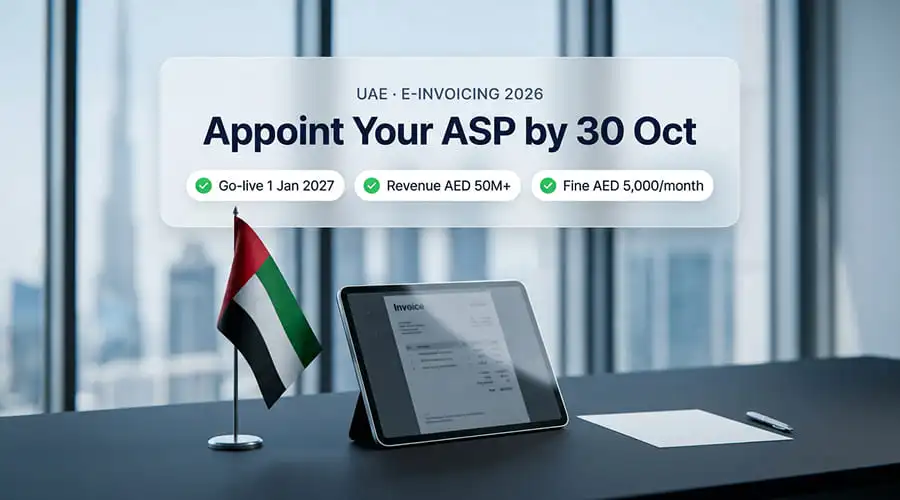
The UAE offers a business-friendly environment that encourages growth through clear and accessible tax policies. Value Added Tax (VAT) was introduced in the Emirates in 2018, providing a new source of funding for public services and infrastructure. With a standard VAT rate of 5% that applies to most goods and services, the rules are straightforward yet flexible, aiming to support both established companies and new entrepreneurs. The government’s approach ensures both local and international businesses understand their obligations and opportunities when operating in the country.
For small and medium-sized enterprises (SMEs), understanding the VAT registration threshold is a key step toward compliance and sustainable growth. Businesses are only required to register for VAT if their taxable turnover exceeds a certain amount, which means many new or smaller ventures have flexibility before full obligations begin. The process is electronic, streamlined, and designed to support a smooth transition as a company’s operations expand.
Understanding the VAT registration threshold
In the UAE, VAT registration thresholds are designed to balance compliance with ease of doing business. For resident companies, VAT registration becomes mandatory once their annual taxable turnover reaches AED 375,000. Taxable turnover includes both supplies of goods and services subject to the 5% standard rate, as well as those subject to a 0% rate, such as exports and some education or health services. Imports are also counted, provided the supply would be taxable if made within the UAE.
If your business expects to exceed this threshold in the next 30 days, registration is also required proactively. For those whose turnover is below the mandatory level but above AED 187,500, voluntary registration is available. This option can be especially useful for growing SMEs that want to open business in UAE and recover input VAT on start-up expenses or build a reputation as a compliant supplier.
Non-resident businesses making supplies in the UAE must register for VAT regardless of turnover, ensuring a level playing field with domestic suppliers.
What qualifies as taxable supplies
For VAT purposes, a taxable supply refers to the sale of goods or services that would attract either the 5% standard rate or the 0% rate. This includes most commercial activities, such as trading, consulting, retail sales, and digital services. Some sectors, like international transport, certain financial services, and residential property rentals, may qualify for an exemption or zero rate—providing further clarity and control for businesses in those fields.
Knowing what counts toward your taxable turnover is essential for determining registration obligations. Keeping accurate records makes it easier to monitor progress toward the threshold and plan future growth.
The benefits of voluntary registration
Registering for VAT voluntarily, even if your business is below the mandatory threshold, brings several advantages. It allows businesses to claim input VAT on qualifying expenses, making start-up costs and operating expenses more manageable. Voluntary registration can also enhance credibility, as many clients and trading partners prefer working with VAT-registered suppliers, particularly when bidding for contracts or entering supply chains with larger organizations.
Additionally, voluntary registrants develop systems and skills early on, which can streamline compliance as operations expand.
Calculating VAT liabilities
VAT is an indirect tax, collected at every stage of the supply chain and ultimately borne by the final consumer. Businesses registered for VAT must charge 5% on taxable sales and issue tax invoices showing the VAT amount. At the same time, VAT paid on business-related purchases (“input VAT”) can be reclaimed, so only the net difference is remitted to the government.
Here’s how calculation typically works:
- Output VAT: The VAT charged by your business on sales.
- Input VAT: The VAT paid by your business on purchases and expenses.
VAT Liability = Output VAT − Input VAT
If you’ve paid more VAT on your purchases than you’ve collected on sales, you can claim the excess amount as a refund or carry it forward. If you’ve collected more than paid, you pay the difference to the Federal Tax Authority (FTA).
Regular accounting and careful documentation are crucial. Businesses need to keep clear invoices and records, making VAT calculation a straightforward, predictable process.
Steps to register for VAT in the UAE
The registration process for VAT is accessible through the Federal Tax Authority’s online portal. After gathering documents like your trade license, Emirates ID, passport copies, and financial statements, you simply apply online. Approval typically takes two to three weeks. Once registered, businesses receive a Tax Registration Number (TRN), which should be included on all tax invoices and official documentation.
For non-resident businesses, it is necessary to appoint a fiscal representative in the UAE who becomes jointly responsible for compliance with tax laws, simplifying local administrative requirements.
Ongoing compliance: filing returns and deadlines
VAT-registered businesses must file their returns—usually every quarter, unless instructed otherwise by the FTA. Returns and payments are due by the 28th of the month following the end of each tax period. It’s important to file and pay on time, as missed deadlines incur a fine, and repeated violations increase the penalty.
Returns are submitted electronically, making the process efficient and traceable. VAT grouping is also available for businesses that meet the criteria, allowing multiple entities under common control to be treated as a single taxable person—reducing paperwork and simplifying tax management.
Managing special cases: zero-rated and exempt supplies
Certain goods and services benefit from a 0% VAT rate. These include exports outside the GCC, international passenger transport, supply of crude oil and natural gas, public healthcare, and education. With zero-rated supplies, businesses can still recover input VAT on related expenses, even though the output VAT is zero.
Meanwhile, exempt supplies—such as most financial services and domestic passenger transport—are outside the scope of VAT, and input VAT related to these activities generally cannot be recovered. Understanding the distinction helps businesses maximize tax benefits through correct classification and planning.
Conclusion: Building confidence and growth through VAT compliance
By understanding and leveraging the UAE’s VAT registration threshold and related rules, businesses can comply confidently and efficiently, reduce their tax burden, and enhance their reputation in the marketplace. With the right approach, VAT becomes a manageable—and even beneficial—part of running and growing a business in the UAE’s dynamic environment.
Setting up a company abroad?
Get a free first consultation on jurisdiction, structure and banking.

This article is for general informational purposes only and is not legal, tax, or financial advice. Consult a qualified professional before acting. Editorial Policy.