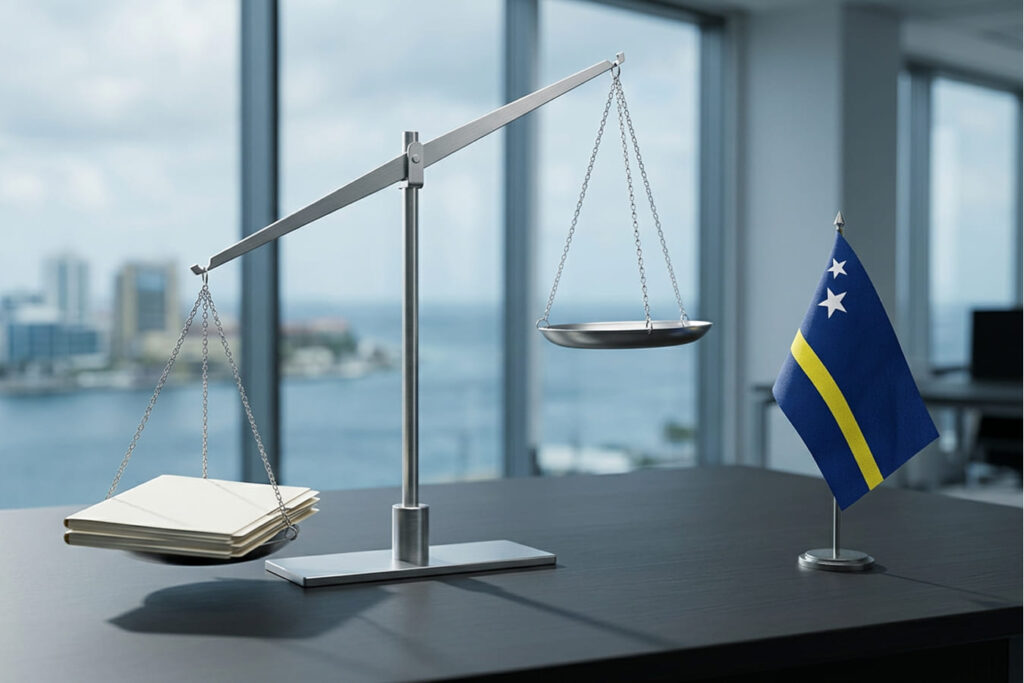
Operators who outgrow a budget license usually end up asking the same question: Curaçao, Malta or the Isle of Man? All three are established, all three license B2C and B2B businesses, and all three are cited by payment providers as “acceptable” in different ways. They are not interchangeable, though. Cost, tax, time to market and, above all, how far each license takes you towards Tier-1 markets differ sharply. This comparison sets out the 2026 numbers and the trade-offs.
Reality Check on “Tier-1 Market Access”
No offshore or EU license on its own lets you take players from the UK, Germany, the Netherlands, Sweden, Italy or Spain. Since the Gambling (Licensing and Advertising) Act 2014, any operator serving players in Great Britain needs a UK Gambling Commission license wherever it is based, and the old “white list” that included the Isle of Man was abolished. Within the EU, the Court of Justice has confirmed there is no obligation on one member state to recognize another’s gambling license, so an MGA license does not “passport” into Germany or the Netherlands either.
So the real Tier-1 question is different: which license gives you the credibility, banking access and supplier relationships to grow into regulated markets, and which one works as your base license for the markets you can lawfully serve today?
Curaçao vs Malta vs Isle of Man: Comparison
| Curaçao | Malta | Isle of Man | |
|---|---|---|---|
| Regulator / law | Curaçao Gaming Authority (CGA), LOK (in force 24 Dec 2024) | Malta Gaming Authority (MGA), Gaming Act (Cap. 583) | Gambling Supervision Commission (GSC), OGRA 2001 |
| Application fee | €4,592 | €5,000 | ~£5,250 |
| Annual B2C fees | €47,450 (€24,490 license fee + €22,960 supervisory fee) | €25,000 fixed + compliance contribution (min €15,000, max €375,000) | ~£36,750 (full license) |
| Gaming tax / duty | No GGR-based gaming tax under the LOK ‹verify›; corporate profit tax applies | Gaming tax on Malta-based players only, revised from 1 Oct 2026 ‹verify rates› | 1.5% of GGY up to £20m, 0.5% £20–40m, 0.1% above £40m |
| Corporate tax | 15% / 22% standard rates ‹verify› | 35% headline, with refunds to shareholders | 0% |
| License term | Indefinite, subject to supervision ‹verify› | 10 years | 5 years, renewable |
| Typical timeline | 4–6 months | 6 months or more | 10–12 weeks after formal acceptance |
| Substance | Resident managing director + full-time local key person | Approved key function holders; €100,000 share capital (Type 1/2 B2C) | Manx company, 2 local directors, resident designated official, servers on the Island |
Fees are regulator charges only. Company formation, local staff, legal work, platform certification and banking add materially to year-one cost in all three jurisdictions.
Curaçao: The Reformed Offshore Workhorse
The LOK replaced the old master-license and sub-license system with direct CGA licensing, new AML and responsible gambling standards, and real local substance. The four master licenses were not renewed and expired between August 2024 and January 2025. What remains is a cheaper, faster license than Malta or the Isle of Man that is still accepted by many payment providers and B2B suppliers for markets outside the regulated EU and UK.
The weaknesses are reputational lag and process risk. Some banks, affiliates and premium studios still apply extra scrutiny to Curaçao brands, and the CGA has reported application backlogs. From 24 December 2026 operators may also only use critical suppliers that are registered with the CGA. Full details of the current process are in our Curaçao gambling license service page.
Malta: The EU Credibility License, With New Tax Rules
An MGA license signals EU-level supervision: approved key function holders, minimum share capital, positive equity and a ten-year license. For B2B suppliers selling into regulated European operators it is often the license buyers expect to see.
Malta’s cost picture changed on 1 October 2026. Under Legal Notices 84 and 86 of 2026, online casino, betting, poker and bingo are now treated as taxable supplies for VAT, taxed where the customer lives, which also opens the right to recover input VAT. Gaming tax and the device levy were merged into a single tax with rates by game type, still applied only to Malta-based players; trade press reports a Type 1 rate of 15% ‹verify›. One more caution: the Article 56A “Bill 55” protection against foreign judgments is under challenge at EU level, with an Advocate General opinion in April 2026 finding it incompatible with Brussels I bis, so it should not be treated as a reliable shield. See our Malta gaming license page for the application route.
Isle of Man: Premium Reputation, Light Tax at Scale
The Isle of Man is a Crown Dependency regulator with a twenty-year track record. Its fees sit between Curaçao and Malta, but its tax profile is the lightest of the three: 0% corporate tax and a gambling duty that falls as gross gaming yield grows. The trade-off is substance and scrutiny: a Manx company, two local directors, a resident designated official and servers on the Island. Our Isle of Man gambling license guide covers the license types in detail.
Which License Fits Which Business?
- Start-up or mid-size B2C operator targeting LatAm, Asia or other markets without local regimes: Curaçao offers the best cost-to-credibility ratio after the LOK reform.
- B2B supplier or operator planning to enter regulated EU markets: Malta is the most recognised stepping stone, provided you budget for the 2026 tax changes.
- Established, profitable operator or crypto-native business: the Isle of Man rewards scale with low duty and 0% corporate tax.
- UK players: none of the three is enough; you need a UKGC license.
Many groups end up combining licenses: a Curaçao license for international markets alongside MGA or local licenses for regulated ones. If you are still shortlisting, our broader offshore gaming license comparison also covers Anjouan, Kahnawake and Tobique.
Frequently Asked Questions
Which is cheaper: Curaçao, Malta or the Isle of Man?
On regulator fees, Malta’s €25,000 fixed fee looks lowest, but the compliance contribution and gaming tax are added on top. The CGA’s €47,450 annual B2C fee is fixed and predictable. The Isle of Man’s ~£36,750 annual fee plus GGY duty can be cheapest at scale thanks to 0% corporate tax.
Do any of these three licenses allow UK players?
No. Since 2014, anyone offering gambling to players in Great Britain needs a UK Gambling Commission license.
Can an MGA license be used across the EU?
No. There is no mutual recognition of gambling licenses in the EU. Each member state with a licensing regime requires its own license.
How long does each license take?
Roughly 4–6 months in Curaçao, six months or more in Malta, and about 10–12 weeks after formal acceptance in the Isle of Man. Preparation time for company formation and documents comes on top.
Is the Curaçao license still credible after the reform?
More than before. Direct CGA licensing, substance rules and supplier registration have raised standards, though some banks and partners still apply extra checks.
Sources: CGA fee guidance under the LOK (via AGBrief, Oct–Nov 2025); MGA, enhancements to Malta’s VAT and gaming tax frameworks (April 2026); Appleby, Guide to Gambling Law in the Isle of Man 2026; UK Gambling (Licensing and Advertising) Act 2014; European Commission gambling case law. Last updated: October 2026.
Disclaimer: This article is general information as of October 2026 and is not legal or tax advice. Fees, tax rates and regulatory requirements change; confirm current figures with the regulator and a qualified adviser before applying.
Planning a gambling license?
Compare Anjouan, Curaçao, Tobique and Kahnawake with our licensing team. The first call is free.

This article is for general informational purposes only and is not legal, tax, or financial advice. Consult a qualified professional before acting. Editorial Policy.